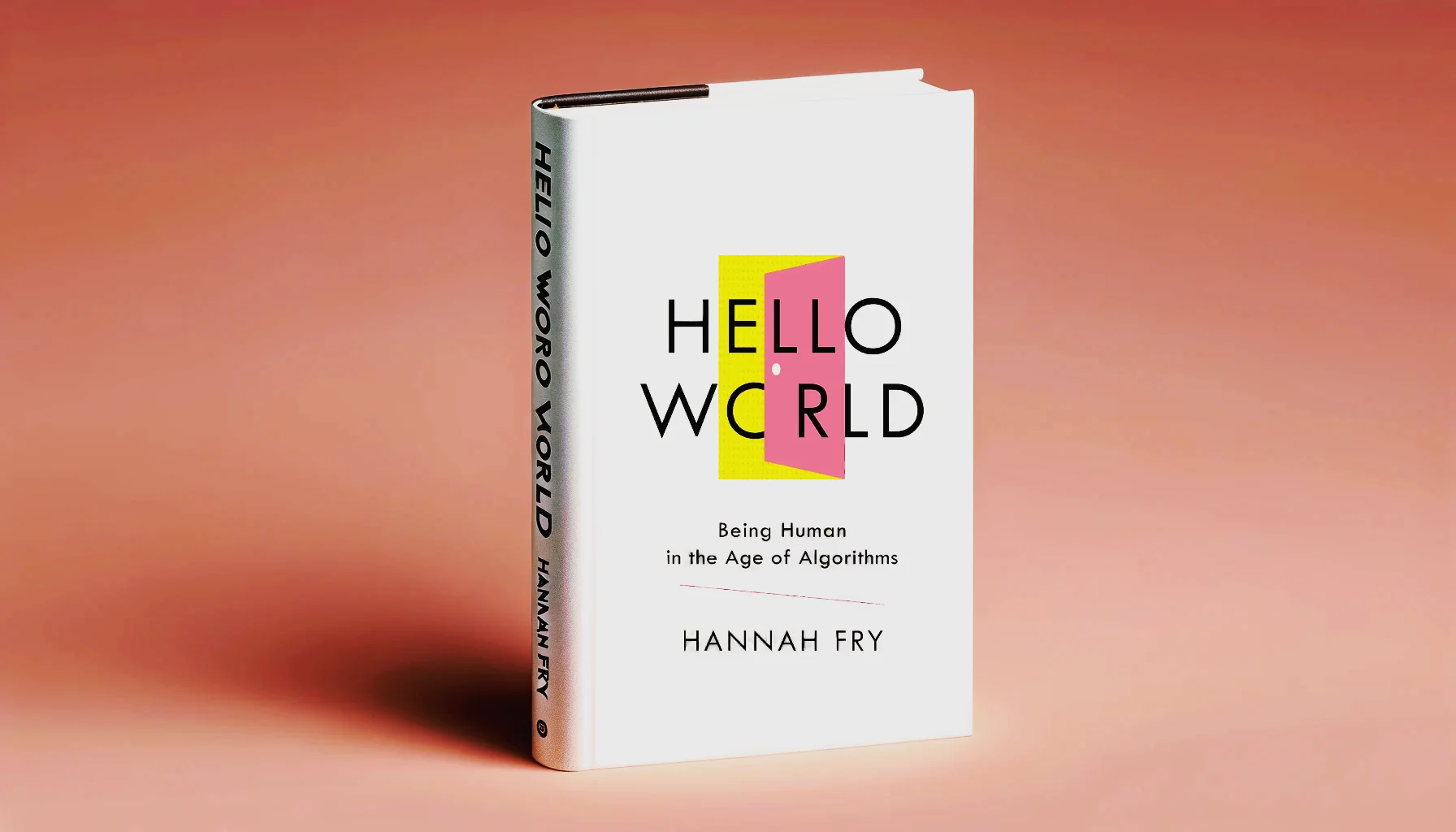
“Hello World: Being Human in the Age of Algorithms” is like your backstage pass to the hidden powerhouses of our modern world—algorithms. These lines of code might be invisible, but they’re pulling the strings behind some pretty major decisions. Hannah Fry, with her expertise in mathematics, ushers us into the rooms where these digital decision-makers live, revealing how they’re put to work in areas we care about deeply.
In the realm of law, algorithms might be the ones helping decide who gets parole and who doesn’t. Imagine a computer program sifting through data to say if someone should stay in jail or go free. In medicine, these codes could be used to figure out what treatment might work best for a patient. It’s like having a silent, number-crunching partner in the doctor’s office, whispering advice.
But it’s not just the big stuff. Algorithms can impact our daily choices too, like what movie we should watch next or who we might want to date. Fry takes us on a journey to show how these codes are learning about us—our habits, our likes and dislikes—and using that information to direct our decisions, often without us even realizing it.
What’s more, Fry isn’t just telling us about the cool things algorithms do; she’s also pointing out where they might need a bit of a reality check. They’re created by people, after all, and can inherit our flaws and biases. This book isn’t just a story about technology; it’s a conversation about how we stay human in an age where our lives are increasingly influenced by the logic of machines. It’s a timely, thought-provoking exploration of the relationship between humans and the algorithms they create.
In “Hello World,” Hannah Fry doesn’t shy away from the tough questions. She delves into scenarios that sound like they’re straight out of a sci-fi novel, but are actually happening today. Take, for instance, the idea of a computer algorithm determining how long a person should be behind bars. This isn’t just theoretical; it’s a reality in some justice systems where algorithms assess the risk of reoffending. But can a computer really capture the full story of a human life, with all its complexities and potential for change?
Fry also examines the realm of healthcare, where algorithms can assist in diagnosing diseases or suggest treatments based on patterns in vast amounts of medical data. On one hand, this can lead to breakthroughs in understanding and treating conditions that have puzzled doctors for years. On the other hand, what happens if the algorithm gets it wrong? Fry takes us into these grey areas, showing us the power and pitfalls of relying on algorithms to make decisions that have real, tangible effects on people’s lives.
She acknowledges the incredible potential of algorithms to make positive changes, like streamlining processes and offering personalized solutions, but she also cautions us about placing blind faith in these systems. By highlighting instances where algorithms falter or reflect our own biases, Fry encourages a more nuanced view. She prompts us to think critically about the role we want algorithms to play in our society and how we might ensure they serve the greater good, not just perform cold calculations. Fry’s exploration is an invitation to be both in awe of what technology can do and vigilant about how we allow it to influence us.
Hannah Fry stresses the importance of vigilance when it comes to algorithms in her book “Hello World.” She makes it clear that while these tools can be incredibly insightful, they can also step into territory that feels intrusive and even unsettling. The example of the company predicting pregnancies is a case in point. Sure, it’s impressive that an algorithm can predict such a personal event from shopping habits, but it also raises questions about privacy. What else might algorithms deduce about our personal lives, and who gets to know this information?
Fry advocates for transparency and fairness in the use of algorithms. They shouldn’t be black boxes with mysterious workings and motives; we ought to understand how they reach their conclusions and ensure those conclusions are based on fair and unbiased data. It’s crucial that these systems don’t just serve the interests of companies and governments but respect individual rights and autonomy.
For Fry, respecting our human side means recognizing that while we can gain a lot from algorithms, we shouldn’t lose sight of human values like empathy, privacy, and the ability to make our own choices. Algorithms should augment our lives, not dictate them. Fry urges us to think about how we can harness technology for the common good, creating a world where algorithms work for us, not against us, and where they enhance our human experience rather than detract from it.
Hannah Fry’s “Hello World” serves as a catalyst for a much-needed conversation about our digital future. The crucial question she raises is how to ensure that as algorithms become more intertwined with our daily lives, they are developed and used responsibly. She suggests a collaborative approach to guide the trajectory of technology towards a common good.
But what does this look like in practical terms? Fry advocates for a collective effort where developers, users, ethicists, and policymakers come together. Developers need to design algorithms that are not only efficient but also transparent and understandable. Users should be informed and empowered to make decisions about the technology they use. Ethicists must help navigate the moral implications of technology, while policymakers must create regulations that ensure fairness and protect privacy.
Fry also implies that education is key. We need to become literate in technology, understanding not just how to use algorithms, but how they are made and the principles behind them. This knowledge equips us to ask the right questions and demand accountability.
Ultimately, Fry calls for a future where technology serves humanity broadly, not just a select few. It’s about creating a balance where algorithms improve our lives without infringing on our values and rights. Her book is a stepping stone to this future, inviting us to be both participants in and shapers of the age of algorithms.
“Hello World” throws open the curtains to reveal the extent of computers’ influence in our lives, from the mundane to the monumental. Hannah Fry paints a picture of a world where algorithms determine the advertisements we see, the news that shapes our opinions, and even the justice we might receive. It’s a wake-up call that challenges us to recognize the silent yet significant role that computers play in the backdrop of our daily existence.
But it’s not just an observation; Fry’s book is a call to action. She reminds us that while technology has raced ahead, our understanding and governance of it haven’t kept pace. We’re at a crossroads where the need to align technology with our values isn’t just philosophical—it’s practical and urgent.
Fry argues that if we want technology to “play nicely,” we need to roll up our sleeves and get to work. This means establishing ethical guidelines for the development and implementation of algorithms, creating oversight mechanisms that can keep pace with technological advancements, and cultivating a public that’s informed and engaged with the tools they use.
“Hello World” isn’t just a commentary; it’s a conversation starter about the kind of digital future we want to build. It’s about ensuring that as technology becomes ever more sophisticated, it doesn’t stray from the values we hold dear—fairness, privacy, freedom, and compassion. The book leaves us with a clear message: the future is not predetermined, and with effort and collaboration, we can steer technology towards a future that respects and enhances our humanity.
Insights
- Algorithms Reflect Human Bias: One of Fry’s critical insights is that algorithms are not inherently objective or neutral. They are created by humans and can perpetuate the biases and prejudices that their creators might hold, whether intentionally or not. This is evident in areas such as criminal justice, where algorithms used to predict future crimes may disproportionately target certain groups based on historical data that reflects past prejudices.
- The Importance of Transparency and Accountability: Fry emphasizes that for algorithms to be trusted and to be beneficial for society, they must be transparent and accountable. This means that the processes by which algorithms make decisions should be understandable by the general public and that there should be systems in place to hold the creators of these algorithms responsible for their impact. This is particularly significant when it comes to algorithms that make life-changing decisions, like those influencing healthcare or legal judgments.
- Balancing Efficiency and Ethical Considerations: Fry points out that while algorithms can increase efficiency and provide solutions to complex problems, it’s essential to balance these benefits with ethical considerations. For instance, the efficiency of data-driven personalized advertising must be weighed against privacy concerns and the potential for manipulation. Fry advocates for a future where technology serves to enhance human decision-making without undermining our agency and rights.
Your Next Action
Become informed about the data you share online. This means reading privacy policies, understanding the permissions you grant to apps and services, and actively managing your digital footprint by regularly checking and adjusting your privacy settings on social media and other platforms where your personal information may be collected and used by algorithms.
Bibliography
Fry, H. (2019). Hello World: Being human in the age of algorithms. W.W. Norton & Company.